
The Essential Guide to Supplies and Toys for Your New Cat
If you’re welcoming a new feline friend into your home, it’s natural to feel overwhelmed by the endless choices for supplies, food, and toys. This guide will help you choose the best products to keep your cat healthy, happy, and safe.
Watch my companion video on Youtube!
1. Carriers: Your Cat’s Travel Safe Space
Your cat’s carrier should be:
- Easy to clean
- Easy to get in and out of (especially for vet visits)
- Large enough for your cat to stand and turn around when fully grown
Tip: Start big a kitten will grow into a larger carrier. My top pick is a hard-sided, top-loading carrier with quick-release clips. For a deep dive, see my full carrier review video.
Have one carrier per cat available
See my YouTube video on how to choose a cat carrier for more!
For the full written breakdown, see my Veterinarian's Guide to Choosing the Best Cat Carrier.
2. Litter Boxes: More Is Better
A good rule: one box per cat, plus one extra.
For example, 3 cats = 4 litter boxes.
 Kara Caldwell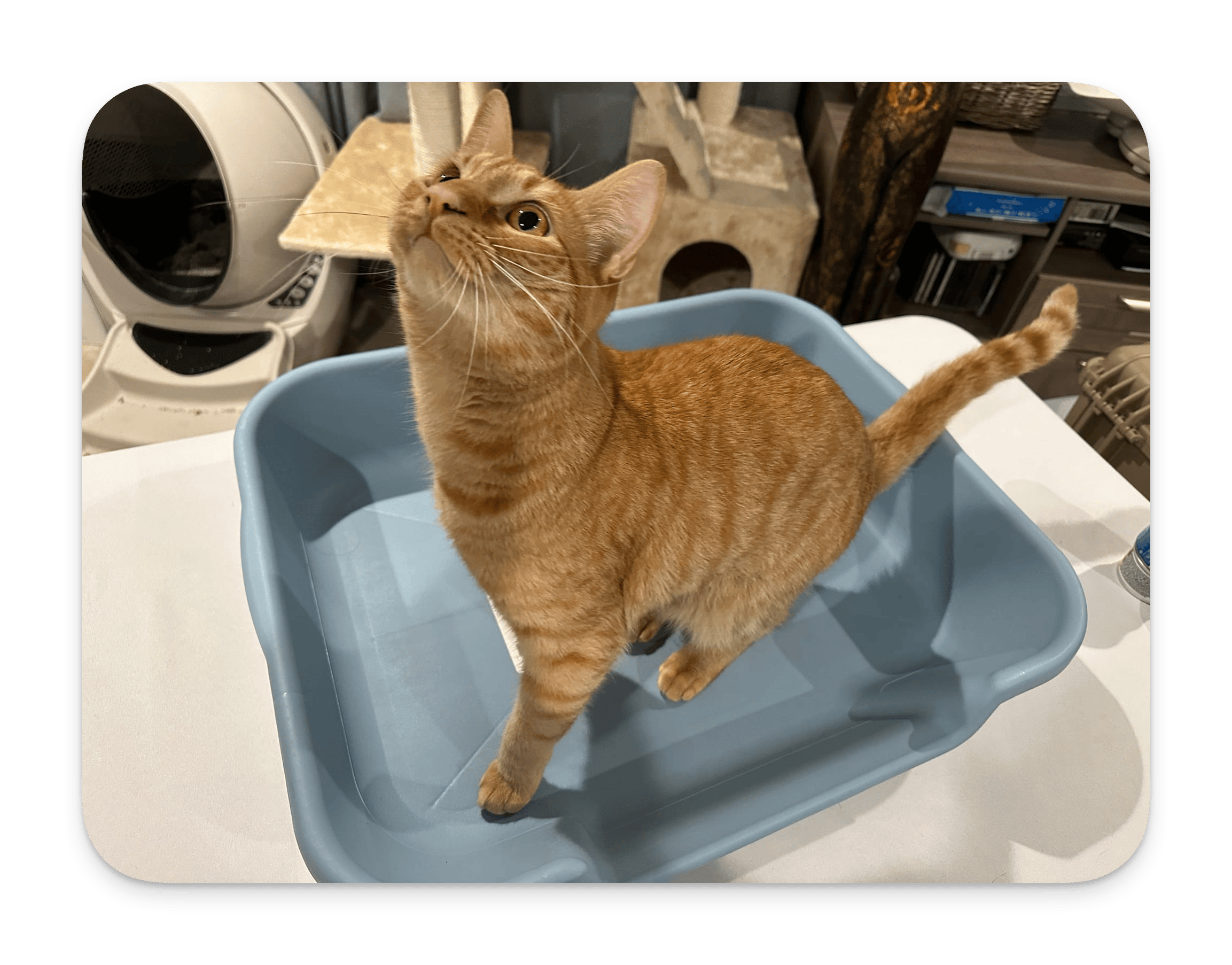
Check out my detailed litter box write up!
Key litter box tips:
- Size: 1.5× your cat’s length (nose to base of tail)
- Shape: Rectangular
- Covered or uncovered? Offer both — a 2012 study showed some cats have strong preferences either way (Grigg et al., 2013).
- Placement: Quiet, private, and away from food/water
- Litter type: Unscented, clumping clay, ~1.5 inches deep
- Accessibility: Low entrances for kittens or arthritic seniors
- Maintenance: Scoop daily; avoid liners (smell & sound can deter cats)
3. Food & Water Setups
Bowls
- Shape: Low edges to prevent whisker fatigue
- Material: Metal, glass, or ceramic (plastic can cause chin acne)
- Elevation: Try raised stands like the Necoichi brand for comfort in cats with elbow arthritis
Water
- Separate from food if possible — many cats prefer it this way.
- Water fountains: Choose dishwasher-safe and non-plastic designs.
Food
- Offer both wet and dry, but emphasize wet for hydration and protein.
- Look for an AAFCO statement matching your cat’s life stage:
- Kitten: “Formulated/tested for growth”
- Adult: “Formulated/tested for maintenance”
- “All life stages” = acceptable but not specialized for your cats needs
- No AAFCO statement? Assume it is not balanced and feed like a treat
- Avoid grain-free hype — low-grain, protein-first diets are better.
- Change food gradually over the course of a week to avoid stomach upset.
4. Toys: Play for Health & Bonding
Cats benefit from three types of toys:
Interactive Toys (bonding & exercise)
- Wand toys with feathers, mice, or cardboard (Cat Dancer cardboard toy is my favorite)
- Keep your hands away from the play area to prevent bites and teaching your cat your hand is an acceptable toy
Solo Play Toys (safe unsupervised fun)
- Large kickers without loose parts
- Ball track toys (can’t get stuck under furniture)
- Motorized balls or toys that are large enough to not be swallowed
Hunting Toys (stimulate natural instincts)
- Hide-and-seek boxes with balls
- “Parachute” toys that move unpredictably
Avoid: Small ribbons, skinny strings, or loose pieces — these can be swallowed and sometimes require surgery.
5. Cat Trees & Scratching Posts
- Cat Tree/Tower: Choose a sturdy model (like Armarkat) with hideaways, platforms, and scratching posts.
- Scratching Posts: At least 2.5× your cat’s body length; offer vertical, angled, and horizontal options with different materials (sisal, cardboard, carpet).
6. Dental Health
- Look for products with the VOHC seal (Veterinary Oral Health Council)
- Brush teeth 3× per week if possible
- Dental treats, water additives, and powders in food can help
- Start young — even kittens can learn
7. Grooming Supplies
- Nail trimmers: Small handheld style; replace if nails start shredding
- Brushing: Slicker or paddle brushes with soft tips work for most cats
- Bathing: Rarely needed — use cat-safe shampoo only if necessary
- Quick clean-ups: Burt's Bees Dandruff wipes or hypoallergenic baby wipes work well
- Sanitary trims: Use quiet, battery-operated trimmers — never scissors
8. Outdoor Gear & Safety
- Harnesses: Wide straps with a leash — no collar walking
- Parasite prevention: Even indoor cats can get heartworm or fleas; see your vet for safe, effective options. Avoid dog products — some are toxic to cats.
Final Thoughts
Bringing a cat home is exciting, and having the right supplies sets you both up for success. These are the essentials I recommend for every new cat household, but I’ll be covering many of these topics in more detail in future videos.
Citation:
Grigg, E. K., Pick, L., & Nibblett, B. (2013). Litter box preference in domestic cats: Covered versus uncovered. Journal of Feline Medicine and Surgery, 15(4), 280–284. https://doi.org/10.1177/1098612X12465606